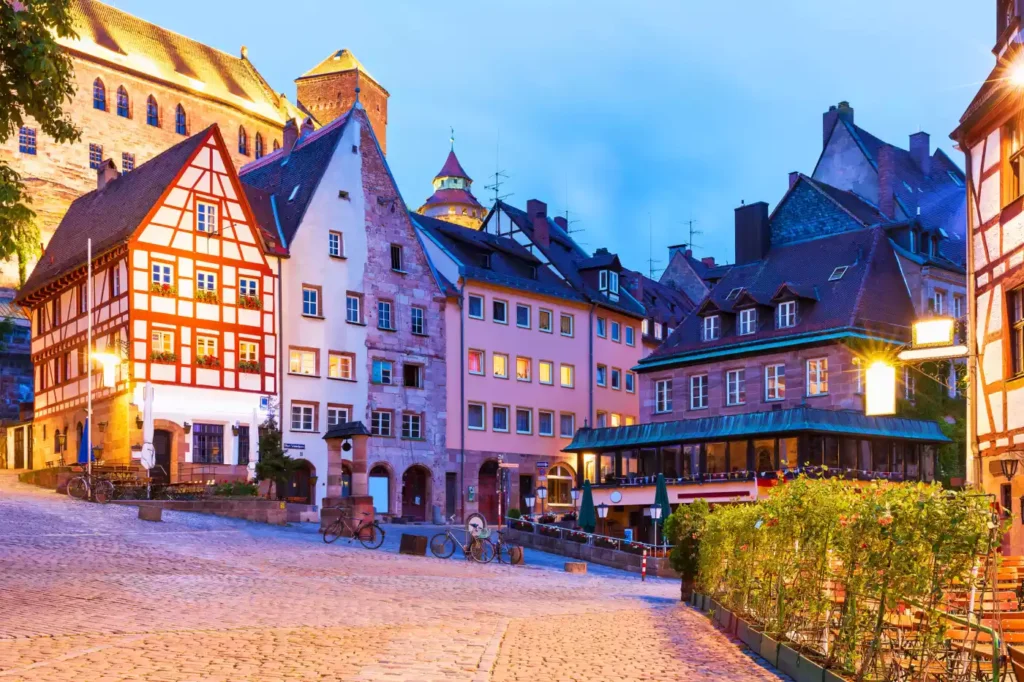
Why does Germany consistently rank among the most aesthetically captivating destinations on Earth? While visual beauty is inherently subjective, travel authorities, global surveys, and millions of annual visitors regularly honor Germany for its rare synthesis of alpine wilderness, dense enchanted forests, half-timbered medieval heritage, and pristine environmental stewardship.
From fairytale castles perched above river mist to futuristic eco-conscious urban architecture, Germany offers a visual landscape unmatched in Central Europe. Here is an in-depth exploration of the primary geographic, architectural, and cultural factors that make Germany one of the world’s most beautiful countries.
1. Dramatic Topographic Diversity
Germany’s terrain changes dramatically within a short train ride or drive. Packed into a single nation is a multi-layered landscape transitioning from alpine peaks in the south to chalk-cliff coastlines in the north.
The Bavarian Alps & Alpine Lakes
In southern Germany, dramatic jagged limestone peaks tower over emerald-green alpine lakes. Lake Königssee—located inside Berchtesgaden National Park—is widely regarded as Germany’s cleanest and most striking body of water, featuring sheer fjord-like mountain walls that drop directly into crystal-clear turquoise waters. Nearby, Lake Eibsee rests directly at the base of the Zugspitze, Germany’s highest peak at 2,962 meters (9,718 feet).
Mystic Woodlands: The Black Forest & Harz
Covering thousands of square kilometers along the southwestern border, the Black Forest (Schwarzwald) is the visual template for traditional European folklore. Dense canopies of evergreens create dark, misty glades, rushing waterfalls like those at Triberg, and moss-covered ravines that inspired the Brothers Grimm.
Surreal Rock Formations: Saxon Switzerland
Located near Dresden along the Czech border, Saxon Switzerland National Park looks less like Western Europe and more like a fantasy realm. Towering sandstone pillars, eroded over millions of years, rise high above pine valleys. The iconic Bastei Bridge, spanning these rock pinnacles 194 meters above the Elbe River, offers one of Europe’s most dramatic panoramic vistas.
Coastal Splendor: Rügen & The Wadden Sea
To the north along the Baltic Sea lies Rügen Island, famous for its stark white chalk cliffs (Kreidefelsen) at Jasmund National Park, made famous by Romantic painter Caspar David Friedrich. Further west, the Wadden Sea—a UNESCO World Heritage Site—presents vast, shifting intertidal mudflats where the sea meets dramatic sky.
2. Fairytale Castles & Palaces
Because Germany existed for centuries as a mosaic of sovereign duchies, principalities, and kingdoms before unifying in 1871, it boasts over 20,000 castles, fortresses, and palaces.
| Castle / Palace | Location | Notable Features | Architectural Style |
| Neuschwanstein Castle | Bavaria | Built by King Ludwig II; direct inspiration for Disney’s Sleeping Beauty Castle. | 19th-century Romanesque Revival |
| Burg Eltz | Rhineland-Palatinate | Hidden deep in a river valley; preserved intact for over 850 years across 33 generations. | Medieval / Renaissance |
| Heidelberg Castle | Baden-Württemberg | Romantic red sandstone ruins overlooking the Neckar River and historic old town. | Renaissance Ruins |
| Sanssouci Palace | Potsdam | Frederick the Great’s summer retreat featuring terraced vineyards and baroque gardens. | Rococo |
| Hohenzollern Castle | Baden-Württemberg | Perched dramatically atop an isolated mountain cone in the Swabian Alps. | 19th-century Neo-Gothic |
3. Impeccably Preserved Medieval Old Towns (Altstädte)
Germany’s commitment to historic preservation means hundreds of small towns look virtually identical to how they appeared half a millennium ago. Cobblestone streets, ancient stone fortresses, and half-timbered architecture (Fachwerk-Häuser) define these historic centers.
- Rothenburg ob der Tauber: Situated along the famous Romantic Road, Rothenburg is Europe’s quintessential medieval town. Complete with fully intact defensive walls, step-gabled houses, and narrow alleys, it feels like stepping directly into a historical time capsule.
- Bamberg: Built across seven hills along the Regnitz River, this UNESCO World Heritage town survived WWII virtually undamaged. Its famous 14th-century Altes Rathaus (Old Town Hall) perches dramatically in the center of a river bridge.
- Quedlinburg & Dinkelsbühl: Quedlinburg features over 2,000 timber-framed houses spanning eight centuries, while Dinkelsbühl maintains complete 15th-century stone fortification walls and towers without heavy commercialization.
           +-------------------------------------------------------+
           |        CORE PILLARS OF GERMAN AESTHETIC BEAUTY        |
           +-------------------------------------------------------+
                                       |
     +-----------------+---------------+---------------+-----------------+
     |                 |                               |                 |
[ Natural Diversity ] [ Historic Castles ]    [ Medieval Altstädte ] [ Eco-Urban Harmony ]
  • Alpine Lakes        • Neuschwanstein        • Half-timbered homes   • Clean Cities
  • Black Forest        • Burg Eltz             • Cobblestone lanes     • Vast City Parks
  • Sandstone Rocks     • Sanssouci             • Walled fortresses     • Clean Riverways
4. The Harmony of Nature, Order, and Modernity
Germany’s aesthetic appeal is elevated by how clean, well-maintained, and eco-conscious its society is. Visual beauty here is not left to chance; it is actively nurtured.
Ecological Stewardship & National Parks
With 16 National Parks, 104 Nature Parks, and 16 UNESCO Biosphere Reserves, nearly 30% of Germany’s total land area is under environmental protection. Strict forestry management and pollution controls keep forests, rivers, and mountain valleys pristine.
Urban Green Spaces
German cities prioritize open green space:
- Englischer Garten (Munich): Spanning 910 acres, this urban park is larger than New York’s Central Park and features natural river waves where river-surfers ride year-round.
- Tiergarten (Berlin): A vast central forest-park that softens the bold modern glass architecture of Germany’s capital.
- Speicherstadt (Hamburg): The world’s largest warehouse district, built on oak pilings with red-brick Gothic Revival buildings intersecting dark canals.
5. Scenic Theme Routes
Germany turned its scenic landscapes into world-class road trip experiences through themed national routes:
- The Romantic Road (Romantische Straße): A 350-kilometer path through Bavaria connecting vineyards, castle ruins, and alpine foothills.
- The Moselle River Valley Route: A winding river drive flanked by steep, terraced Riesling vineyards and fairytale castles like Reichsburg Cochem.
- The German Fairy Tale Route (Märchenstraße): Tracing 600 kilometers from Hanau to Bremen, linking the enchanted woods and medieval villages that inspired classic folktales.
Why Germany Stands Out
Germany ranks among the world’s most beautiful countries because its charm is multi-dimensional. It offers dramatic wilderness alongside world-class historic architecture, meticulous preservation, and pristine environmental care. Whether gazing up at Neuschwanstein Castle in winter, hiking the Bastei Bridge in autumn, or strolling a half-timbered village in spring, Germany delivers unmatched visual splendor.