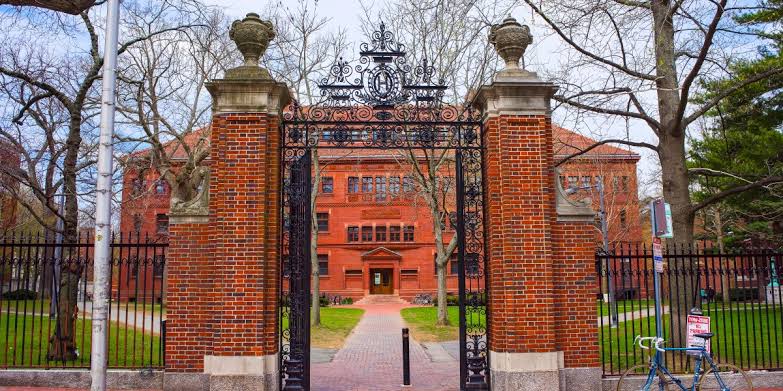
When George Washington took command of the Continental Army under an elm tree on the Cambridge Common in July 1775, Harvard was already 139 years old.
Think about that timeline for a moment. Before the Declaration of Independence was drafted, before the US Constitution was framed, and over a century before the American Revolution birthed a nation, a small puritan college sat along the banks of the Charles River in Cambridge, Massachusetts. Founded in 1636, Harvard University did not just outdate the United States—it helped invent the intellectual apparatus that built it.
Today, Harvard is less of a university and more of an international institution—a global brand synonymous with ultimate academic prestige, unthinkable wealth, and world-shaping political power. Yet beneath the Ivy League mystique, red-brick Georgian architecture, and trillions of words published in academic journals lies a saga filled with bizarre traditions, titan secrets, and deep historical ironies.
Here is the deep dive into the university that was already ancient before the United States was born.
1636: A Wilderness Experiment in “New Towne”
In the autumn of 1636, the Great and General Court of the Massachusetts Bay Colony voted to allocate £400—a massive sum for a struggling colonial settlement—to establish a school. Their motive was simple, if stark: “To advance Learning and perpetuate it to Posterity; dreading to leave an illiterate Ministry to the Churches, when our present Ministers shall lie in the Dust.”
The iconic John Harvard landmark. Source: William Reynolds / Getty Images
Initially called “New College” in the town of New Towne, the institution was renamed in 1639 after a young minister named John Harvard. Upon dying of tuberculosis, the 30-year-old left his personal library of 400 volumes and half his estate (£779) to the school. In gratitude, New Towne was renamed Cambridge, after the English university where many colonial leaders had studied.
The Statue of Three Lies
If you walk into Harvard Yard today, you will see tourists lining up to touch the shiny bronze toe of the John Harvard Statue. Campus tour guides gleefully call it the “Statue of Three Lies”:
- The Inscription: It calls John Harvard the “Founder.” He wasn’t; he was the first major benefactor.
- The Date: It reads “1638.” Harvard was actually founded in 1636.
- The Face: Nobody knows what John Harvard looked like. The sculptor, Daniel Chester French, used a handsome Harvard student (Sherman Hoar) as his model in 1884.
How Harvard Shaped America (and Vice Versa)
Harvard wasn’t just a bystander during the birth of America; it was the intellectual incubator for the Revolution.
| Historical Era | Harvard’s Role & Impact | Key Figures |
|---|---|---|
| Colonial & Revolutionary | Supplied the philosophical framework for American independence and republican government. | John Adams, Samuel Adams, John Hancock |
| Civil War Era | Stood firmly with the Union; Memorial Hall was built specifically to honor Harvard men who died fighting slavery. | Charles Sumner, Robert Gould Shaw |
| The Gilded Age | Pioneered the modern research university format, replacing strict classical curricula with elective courses. | Charles William Eliot (President) |
| Modern Geopolitics | Served as a breeding ground for U.S. Presidents, Supreme Court Justices, foreign heads of state, and tech leaders. | JFK, FDR, Barack Obama, Mark Zuckerberg |
When British soldiers occupied Boston in 1775, Harvard students were evacuated to Concord, while George Washington used Harvard’s Wadsworth House as his military headquarters.
Annenberg Hall, first-year dining hall. Source: Rick Friedman / Corbis via Getty Images
Secrets of the Ivy Walls: Bizarre Traditions and Lore
Beyond the solemn halls of law and medicine, Harvard harbors eccentric traditions refined across nearly four centuries.
1. The Secret Societies & Final Clubs
While Yale boasts Skull and Bones, Harvard has its elite Final Clubs—exclusive, single-gender or co-ed private social clubs housed in unmarked mansions around Harvard Square. The most famous, the Fly Club and the Porcellian Club, have counted presidents (FDR was a Fly member; Teddy Roosevelt was a Porcellian) and titans of industry among their brotherhood. Legend has it that if a Porcellian member does not achieve financial independence by 30, the club will grant it to them—a myth, but one that speaks to their reputation.
2. Pranks, Rivalries, and “The Game”
Every November, Harvard faces off against Yale in “The Game”—one of college football’s oldest rivalries. Over the decades, it has produced legendary pranks:
- 1982: MIT students snuck into the Harvard-Yale stadium overnight and installed an inflatable black weather balloon with “MIT” written on it. Mid-game, the balloon blew up from under the turf on the 46-yard line, expanding until it exploded in front of thousands of bewildered spectators.
3. The Great Butter Rebellion of 1766
Long before student protests of the 1960s, Harvard experienced America’s first recorded student rebellion. The cause? Rancid butter in the dining hall. Student Asa Dunbar stood up on a table and declared, “Behold, our butter stinketh!” Half the student body walked out in protest, prompting a colony-wide scandal that required the Board of Overseers to resolve.
The Numbers Behind the Powerhouse
To truly understand Harvard’s footprint today, look at the staggering numbers behind the institution:
- $50+ Billion Endowment: Harvard’s financial fund is larger than the Gross Domestic Product (GDP) of nearly 100 sovereign nations. It operates more like an investment house attached to a university.
- 8 U.S. Presidents: John Adams, John Quincy Adams, Rutherford B. Hayes, Theodore Roosevelt, Franklin D. Roosevelt, John F. Kennedy, George W. Bush (HBS), and Barack Obama (HLS).
- 160+ Nobel Laureates: Affiliated as faculty, researchers, or alumni.
- 18 Million Volumes: Housed within the Harvard Library system across 78 individual library units—making it the largest academic library system in the world.
The Legend of Widener Library
At the center of Harvard Yard stands the majestic Harry Elkins Widener Memorial Library, a towering neo-classical monument built in 1915. Behind its imposing stone stairs lies a tragedy.
Harry Elkins Widener was an 18-year-old Harvard graduate and avid rare-book collector who boarded the RMS Titanic in April 1912 alongside his wealthy parents. Harry drowned in the disaster. His grieving mother, Eleanor Elkins Widener, donated $3.5 million to Harvard to build a library in his memory—with strict stipulations:
- Harry’s private collection of rare books must be kept in a climate-controlled room at the center of the library, preserved exactly as he left it.
- No stone of the library facade may ever be altered.
For decades, campus urban legend claimed Eleanor also demanded that every Harvard student pass a swimming test before graduating so no alumnus would meet Harry’s fate. While the swim test legend isn’t true, Widener remains the heart of Harvard’s academic machine—housing miles of subterranean stacks buried deep beneath the grass of Harvard Yard.
Why Harvard Still Matters
Harvard University isn’t just a place of higher education; it is a living timeline of western intellectual history. From a tiny colonial academy educating Puritan ministers in 1636 to a global academic giant influencing medicine, policy, law, and technology in the 21st century, Harvard has continuously reshaped itself to match the world it helped build.
The next time you look at the United States—its law, its language, its government, or its innovations—remember that before any of it took shape, scholars were already walking the brick pathways of Cambridge, Massachusetts.